Why Controlled Manufacturing Still Defines Real Cargo Security
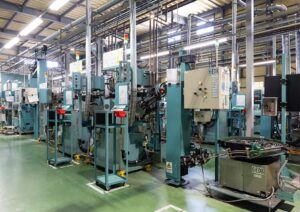
Every shipment moving across oceans depends on trust. Containers travel thousands of miles through ports, bonded warehouses, cross-dock terminals, trucking networks, and final delivery hubs. Each handover introduces uncertainty, and every logistics professional understands the uncomfortable truth: the more complex the journey becomes, the more fragile confidence becomes.
Security seals exist to answer one simple question.
Has this cargo remained untouched?
Yet many companies unknowingly rely on products manufactured in environments they cannot verify, cannot audit, and cannot control. Procurement teams often assume certification equals security. They assume a product label guarantees reliability.
But trust does not come from paperwork alone.
Trust comes from controlled manufacturing.
Global trade runs on predictability. When predictability disappears, inspections increase, delays multiply, and risk quietly spreads through the supply chain.
That is why trust cannot be outsourced.
The Dangerous Illusion of Global Convenience
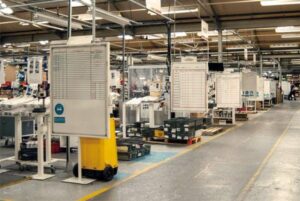
Modern sourcing encourages speed above all else. Online procurement platforms allow buyers to locate seal suppliers within minutes. Quotes arrive instantly. Samples look acceptable. Pricing appears competitive.
The decision feels efficient.
What remains invisible is the manufacturing reality behind the product.
Many anonymous suppliers do not manufacture seals themselves. Production may shift between subcontracted factories depending on cost fluctuations. Tooling changes. Resin quality changes. Metal composition changes. Even locking mechanisms change without notice.
From procurement’s perspective, nothing appears different.
From a risk perspective, everything has changed.
Security products behave differently from ordinary consumables. A broken carton box is an inconvenience. A failed seal becomes a compliance event.
When manufacturing control disappears, predictability disappears with it.
Why Security Products Are Different From Ordinary Purchases
Security seals are not accessories. They function as physical evidence. Customs authorities, insurers, auditors, and clients rely on seals as proof that cargo integrity remained intact.
That responsibility creates a higher standard.
Critical security equipment requires:
- Controlled tooling
- Verified raw materials
- Consistent production tolerances
- Traceable batch management
- Long-term manufacturing accountability
These conditions cannot exist inside fragmented production networks chasing short-term pricing advantages.
Security manufacturing is not about producing large quantities quickly. It is about producing identical performance repeatedly under pressure.
The Meaning of British Manufacturing Authority

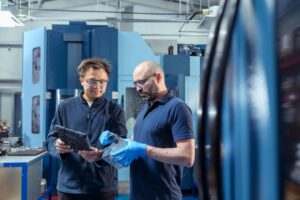 Organizations like Acme Seals have operated through world wars, global trade expansion, containerization, digital transformation, and evolving security threats. Surviving across generations requires more than history. It requires continuous operational credibility.Heritage becomes valuable only when it proves resilience.
We are not old.
We are proven.
Controlled Manufacturing Creates Predictability

Predictability is the invisible currency of global trade. Ports function efficiently because procedures remain consistent. Airlines operate safely because engineering standards remain stable. Logistics networks succeed because outcomes can be trusted.
Controlled manufacturing delivers that same stability.
When seals originate from a controlled environment:
- Locking strength remains consistent.
- Tamper evidence behaves reliably.
- Identification markings remain legible.
- Materials perform under heat, cold, and handling stress.
Procurement teams stop worrying about variation between shipments. Operations teams stop improvising solutions. Compliance teams gain confidence during audits.
Predictability reduces friction across the entire supply chain.
The Hidden Cost of Outsourcing Trust
Outsourcing production may reduce upfront pricing, but it transfers risk downstream.
Uncontrolled manufacturing introduces questions no logistics manager wants to answer:
- Why did seals break prematurely?
- Why does this batch differ from the last shipment?
- Why does documentation not match product characteristics?
- Why is customs questioning seal authenticity?
The cost of uncertainty rarely appears in procurement budgets. It appears later as detention charges, inspection delays, and damaged client confidence.
Trust outsourced to unknown manufacturing environments eventually returns as operational exposure.
Pressure Reveals the Difference

Every supply chain experiences pressure. Congested ports, geopolitical disruptions, regulatory changes, and increased inspection regimes test operational systems constantly.
During stable periods, almost any supplier appears reliable.
Under pressure, only controlled manufacturers remain predictable.
When logistics networks tighten, buyers rediscover the value of partners who maintain consistent output regardless of market volatility. Manufacturing authority becomes visible precisely when uncertainty rises.
This is where established UK manufacturing quietly wins.
Not through marketing claims.
Through performance when conditions become difficult.
Why Procurement Leaders Are Re-Thinking Supplier Strategy
Forward-thinking logistics and procurement leaders are moving beyond price-led decisions. They recognize that security products influence risk exposure far beyond their cost.
Modern procurement increasingly asks deeper questions:
- Who actually manufactures the product?
- Can the production environment be audited?
- Does the supplier maintain long-term operational continuity?
- Will this partner still support us during disruptions?
These questions reflect a shift from purchasing goods to managing risk.
Security seals are no longer viewed as commodities. They are treated as assurance tools embedded within compliance strategy.
Manufacturing Authority Builds Operational Confidence
When procurement aligns with controlled manufacturing, confidence spreads across departments.
Operations trust the equipment.
Compliance trusts documentation.
Clients trust shipment integrity.
Regulators trust the process.
This alignment reduces friction at every handover point in global trade.
We do not simply apply seals to containers. We apply confidence to movement itself.
That confidence begins at the factory floor, not at the shipping terminal.
Choose Predictability Over Convenience
Global trade does not reward shortcuts for long. Efficiency depends on systems that perform reliably every single time.
Trust cannot be outsourced to anonymous supply chains or temporary vendors. It must be built through controlled manufacturing environments capable of delivering consistent performance year after year.
British manufacturing authority exists for a reason. It represents discipline, accountability, and resilience shaped through generations of industrial experience.
At Acme Seals UK, we believe security is not defined by the product alone but by the manufacturing integrity behind it.
If your organization wants predictable cargo security, stronger compliance confidence, and partners proven under pressure, it may be time to reconsider where trust truly begins.
Because in global logistics, reliability is never accidental.
It is manufacture